
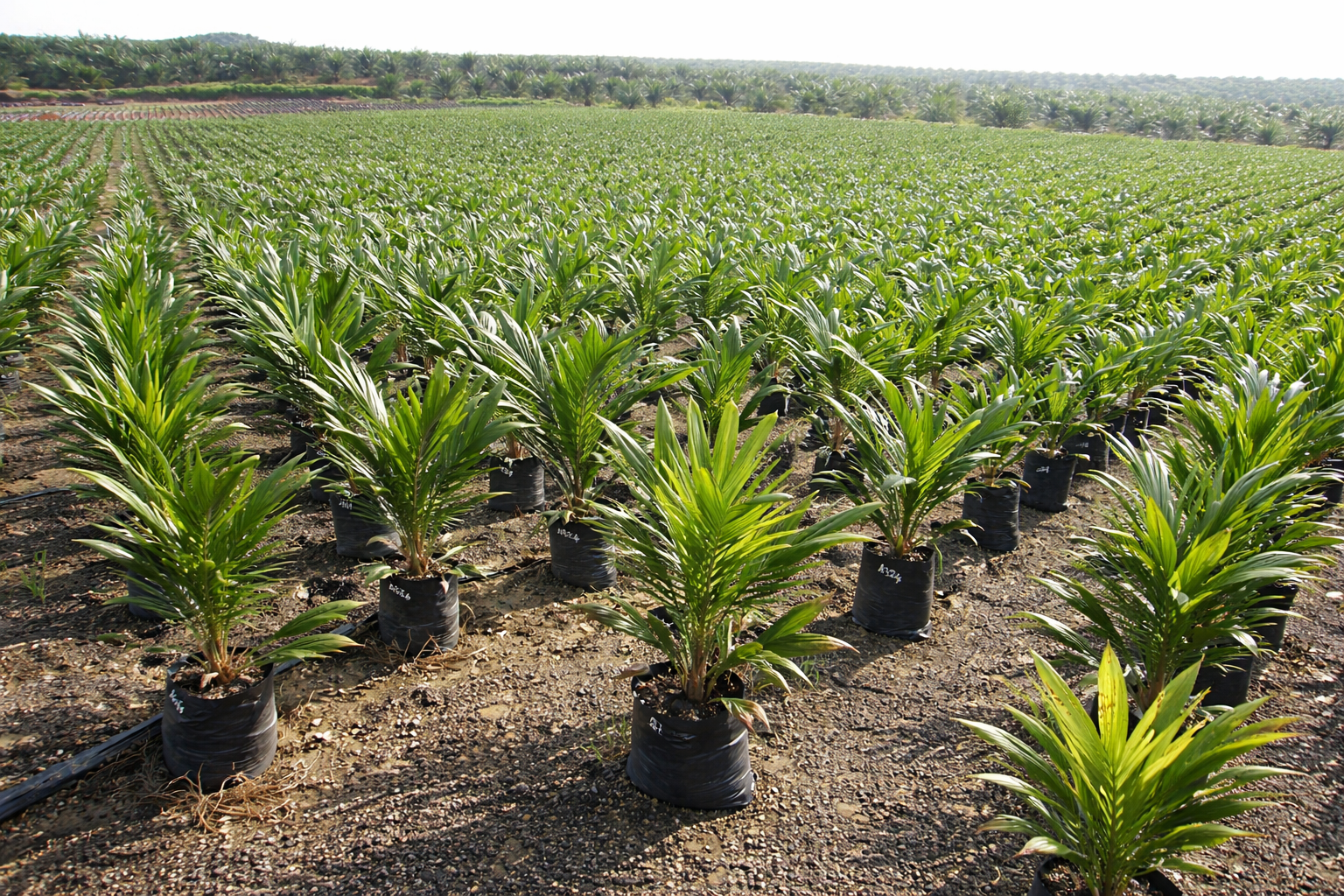
Establishing an oil palm plantation is a long-term agricultural investment. One of the most important decisions a farmer makes at the beginning of that journey is the choice of planting material.
Healthy and properly selected oil palm seedlings give farmers a stronger foundation for establishing productive plantations and managing the crop over many years.
What Makes a Good Oil Palm Seedling?
Good planting material should come from a reliable and properly managed source. Seedlings should be healthy, vigorous and suitable for field planting.
Farmers should avoid selecting seedlings simply because they are cheap or readily available. The quality and source of the planting material should be considered carefully.
Why Seedling Quality Matters
1. Stronger Plantation Establishment
Healthy seedlings have a better foundation for establishing themselves after transplanting. Proper field preparation and good management are also necessary to help young palms develop well.
2. Better Long-Term Farm Planning
Oil palm is a long-term crop. Farmers therefore need to think beyond the first few months after planting and consider how the plantation will perform over many years.
3. Uniform Plantation Development
Planting healthy and reasonably uniform seedlings can make plantation management more organised. Differences in growth can otherwise make field operations more difficult.
4. Reduced Risk of Poor Planting Material
Planting materials from unreliable sources may introduce problems that can become costly to correct after the plantation has already been established.
Choosing a Reliable Seedling Source
Farmers should ask questions about where seedlings come from and how they were produced. A responsible supplier should be able to provide information about the planting material and its production process.
It is also important to inspect seedlings before transporting them to the farm. Farmers should look for healthy plants with good development and no obvious signs of damage or disease.
Preparing Seedlings for Field Planting
The transition from the nursery to the field should be carefully planned. Land preparation, pegging, spacing and planting conditions all contribute to successful establishment.
- Prepare the field before transporting seedlings.
- Use appropriate planting spacing.
- Handle seedlings carefully during transportation.
- Avoid unnecessary damage to roots and leaves.
- Plant under suitable field conditions.
- Maintain young palms after planting.
Caring for Young Oil Palm
Planting quality seedlings is only the beginning. Young palms require proper management during their establishment period.
Weed management, field sanitation, moisture management and appropriate nutrition are important parts of young plantation management.
Quality Seedlings and the Future of the Farm
An oil palm plantation represents a long-term commitment. Farmers should therefore treat the selection of planting materials as an important investment decision rather than a minor farm expense.
Combining quality planting materials with suitable land, proper field preparation and good management gives the farmer a stronger foundation for developing a productive plantation.
Our Agricultural Approach
At Tefutor & Sons Limited, we recognise the importance of quality planting materials in agricultural development. Our oil palm activities form part of our broader approach to plantation development, processing and value addition.
We believe that sustainable agricultural businesses are built through careful planning, practical field management and long-term commitment.